
What is a Reverse Proxy?
The reverse proxy is the hidden hero of the internet. If you are building scalable backend systems, you will inevitably rely on one. But what exactly does it do?
Forward vs. Reverse Proxy
To understand a reverse proxy, you first need to understand a forward proxy.
- Forward Proxy: Protects the client. When you use a corporate VPN or web filter to access the internet, you are using a forward proxy. The internet thinks the proxy is making the request, masking your identity.
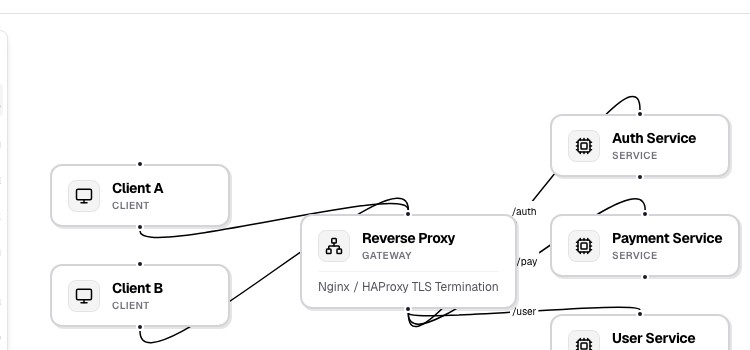
- Reverse Proxy: Protects the server. It sits in front of your backend application servers and intercepts all incoming internet traffic. The client thinks it is talking to the final server, masking your backend's identity.
Core Responsibilities
Why put a server in front of your servers?
- Load Balancing: The proxy distributes incoming traffic across multiple backend instances (e.g., Round Robin or Least Connections) to ensure no single server is overwhelmed.
- SSL Termination: Encrypting and decrypting HTTPS traffic is CPU-intensive. The proxy handles the SSL certificates, freeing up your backend servers to just process business logic over HTTP.
- Caching: If 1,000 users request the exact same static asset or API payload, the reverse proxy can cache the response and serve it instantly without bothering the backend.
Real-world Example: Nginx
Nginx is one of the most popular reverse proxies in the world.
[CODE]
nginxserver { listen 80; server_name api.rekhic.in; location / { proxy_pass http://internal_backend_servers; } }
In this configuration, Nginx listens on port 80 and blindly forwards the traffic to an internal cluster of servers.
Visualize your architecture with beautiful shapes and text or specialized architecture nodes in Rekhic.