As systems grow in complexity, synchronous communication between services can lead to fragile architectures. If Service A calls Service B synchronously, and Service B is down, Service A also fails. This tight coupling reduces system resilience.
Event-Driven Architecture (EDA) solves this by decoupling services through asynchronous events.
What is an Event?
An event is a record of something that has happened in the system. For example, OrderPlaced, UserRegistered, or PaymentFailed. Events are immutable; once they happen, they cannot be changed.
Core Components of EDA
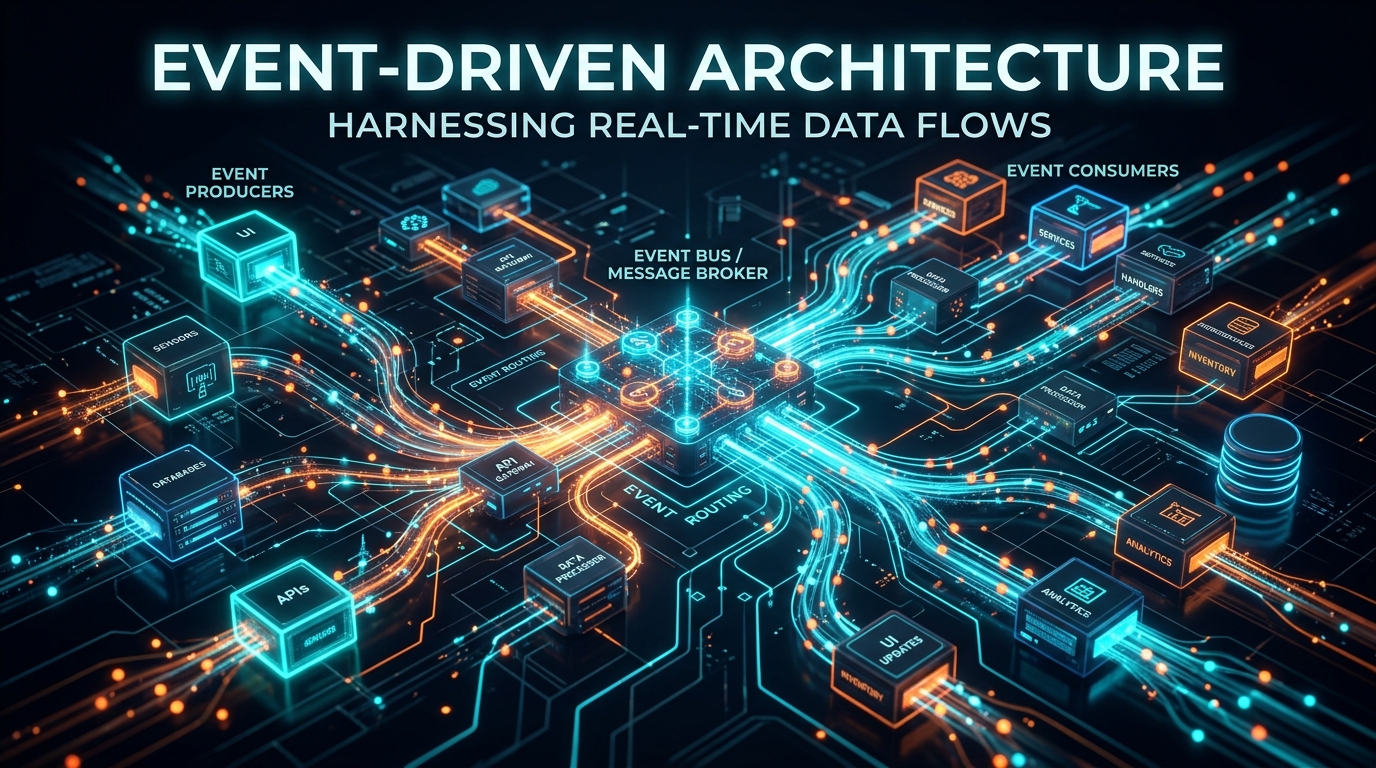
- Event Producers: Services that generate and publish events to an event broker.
- Event Broker: The central nervous system (e.g., Apache Kafka, AWS EventBridge, RabbitMQ) that receives events and routes them to interested consumers.
- Event Consumers: Services that listen for specific events and react to them.
The Pub/Sub Pattern
The most common pattern in EDA is Publish/Subscribe (Pub/Sub). A producer publishes an event to a topic, and multiple independent consumers subscribe to that topic. The producer doesn't need to know who is consuming the event, or even if anyone is consuming it at all.
typescript// Example Producer async function placeOrder(orderData) { const order = await database.orders.create(orderData); // Publish event await eventBroker.publish('OrderPlaced', { orderId: order.id, amount: order.amount, userId: order.userId }); return order; }
Benefits of EDA
- Loose Coupling: Services are completely independent.
- Resilience: If a consumer is down, the event broker stores the events until the consumer recovers.
- Extensibility: You can add new features simply by creating a new consumer that listens to existing events, without modifying the producer.
Challenges
EDA is powerful but introduces new challenges:
- Eventual Consistency: Data across the system is not updated instantaneously.
- Observability: Tracing a single user action across multiple asynchronous events requires robust distributed tracing.
- Complex Error Handling: Designing retry mechanisms and dead-letter queues is essential.
When designing event-driven systems, drawing the event flow visually is critical to understanding how the system behaves under different scenarios.